IT
How does Onclass work? Support Online now: 700

Biology / Lessons

Nothing found.

We couldn’t find any matching results. Try adjusting your keywords or browsing by category.

Lessons in other subjects

0
22
el modo imperativo de presente
  • Spanish

el modo imperativo de presente

- el uso del modo imperativo - los imperativos afirmativos (regulares e irrgulares) - los imperativos negativos (regulares e irrgulares) - los imperativos de los verbos reflexivos - los imperativos con cd y ci

  • Theory with exercises
  • Intermediate
  • Spanish
Polina Evstafjeva
Polina Evstafjeva
0
22
primeros pasos
  • Spanish

primeros pasos

- saludos y despedidas - los pronombres - los verbos "llamarse", "ser", "tener", "estar"

  • Theory with exercises
  • Beginner
  • Spanish
Polina Evstafjeva
Polina Evstafjeva
0
21
Difference
  • English

Difference

English is full of look-alike and sound-alike words that easily trip up even confident speakers and writers. This lesson breaks down two frequently confused pairs: disassemble vs. dissemble and envelop vs. envelope. By exploring their origin, exact definitions, and silent letter differences, you'll learn how a single letter or syllable completely changes a word from a physical action into a cover, or from a lie into taking something apart. Perfect for refining your writing accuracy and vocabulary precision.

  • Theory
  • Beginner
  • English
Eugeniia Klimutina
Eugeniia Klimutina
0
21
Hobbies
  • English

Hobbies

In this class we will talk about hobbies and revise Present vs Future Simple

  • Theory with exercises
  • Elementary
  • English
Maria  Nekrasova
Maria Nekrasova
0
21
Basic Russian Phrases
  • Russian

Basic Russian Phrases

Now that you understand the Russian letters and numbers, we will begin to learn some basic Russian phrases that you will commonly use as part of everyday communication. We will not attempt to introduce any grammar in this lesson. It is more important to learn some basic communication skills in Russian. Once you have a 'feel' for the language, you will find it easier to understand how the grammar works. When you were young, you learnt to speak before you learnt the grammar. We feel it is easier to learn Russian the same way, however don’t worry, we will cover grammar in later lessons. In this lesson you will learn the Russian language basics. When you are in Russia it is important to realise that Russians have two manners of speaking, formal or friendly. It would be considered slightly rude to use the wrong form in the wrong situation. Use the friendly (or familiar) form when you are speaking to someone you consider a friend. In situations where you have never met the person before you would use the formal form, for example in shops or with taxi drivers. You would also use the formal form as a sign of respect to teachers, or in places like business meetings. Keep this in mind as you work through these Russian lessons. This is much easier than it sounds, as there are only a couple of words that change. (Mainly the Russian word for “you”.)

  • Theory
  • Beginner
  • Russian
Eugeniia Klimutina
Eugeniia Klimutina
0
21
Hobby vs Career
  • English

Hobby vs Career

In this lesson we will talk about hobbies and if it can become a business

  • Theory with exercises
  • Advanced
  • English
Maria  Nekrasova
Maria Nekrasova
0
21
Podcast: "Hardware"
  • English

Podcast: "Hardware"

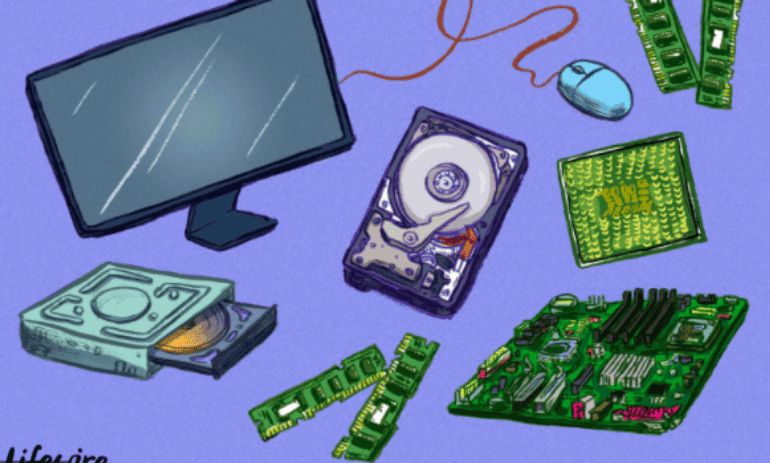
"Hardware" means the computer itself and other machines which are connected to the computer such as printers or external disk drives. "Software" means the electronic programmes which make the computer do what you want it to do (or, sometimes, what the computer wants to do!)

  • Podcast
  • Intermediate
  • English
Eugeniia Klimutina
Eugeniia Klimutina
0
21
FCE
  • English

FCE

Writing with all parts for FCE test

  • Reading
  • Upper Intermediate
  • English
Darina Gribanova
Darina Gribanova