


- English
Poses
Poses for photographers and vocabulary
- Theory
- Intermediate
 English

Nothing found.
We couldn’t find any matching results. Try adjusting your keywords or browsing by category.
Poses for photographers and vocabulary
English
In our next Russian lesson will introduce words and phrases associated with families. This will allow you to talk about your family, which is a very popular topic of conversation in Russia. One of the important concepts that we will introduce in this lesson is possessive pronouns. Possesive pronouns are words such as: my, your, his, her, and our. Personal pronouns are normally used to indicate the ownership of an object. The other method to indicate ownership is to use the genative case.
Russian

Capitals of UK Capitals of UK Capitals of UK Capitals of UK
English

AI is something that can truly change our reality, or has it already done it? Social media is already influencing us, that's for sure! In this lesson, you will look at the results of using new technologies and try to predict the possible effects this usage can have in the near future. The best predictor of future performance is past performance, right?
English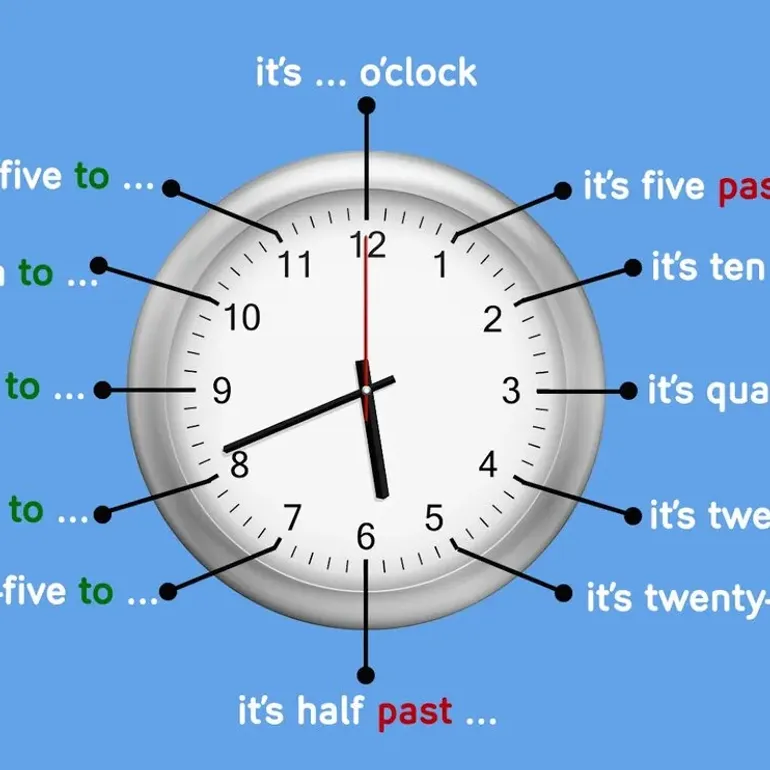
This lesson helps learners understand how to ask for and tell the time in English. Students will learn key expressions such as o’clock, half past, quarter past/to, and how to use a.m. and p.m. They will also practice common questions and answers: “What time is it? – It’s …” and “When does it start? – At …”.
English
----
English
In this class we will talk about hobbies and present simple (negative sentences and time markers)
English

English pronunciation for Spanish speakers. If Spanish is your native language, this video will help you to fix a common mistakes that Spanish speakers make when they're speaking English. When the letter S is at the beginning of a word and the following letter is a consonant, make sure that you don't add an extra vowel sound before the word. For example, don't say "estudy". Don't take a breath before you say the word. Just start saying the "s". Watch this video for other examples.
English
Today we go horse racing, and we meet people with lots of money and no dress-sense! Ascot is a small town, south-west of London, and close to the royal castle at Windsor. In 1711, Queen Anne went horse-riding from Windsor, and "discovered" Ascot. She decided that it was exactly the right place for horse races.
English
In this lesson we will learn Management in company and grammar - countable/uncountable words
English