


- Inglese
"Policies, Politics and Dollars Rest on US Census"
Every 10 years the government has to count the population. But some people would rather not be counted.
- Podcast
- Intermedio superiore
 inglese

Every 10 years the government has to count the population. But some people would rather not be counted.
inglese
Have you a dream? I mean, is there something that you would really like to do in your life – such as travelling round the world, or writing a best-selling novel, or climbing Mount Everest, or learning a new language. Good. It is important that we have dreams like these. But what would you do to achieve your dream. Would you, for example, walk out of your job so that you could do the thing you really want to do? Hmm. That might be difficult. How would you get the money you need to live on? And suppose you had a well-paid and very important job. Would you give that job up to pursue your dream? This morning's newspapers tell us about someone who has done just that. His name is Paul Drayson. He is 47 years old. He started his career as a businessman, and he was very successful. He made a fortune as boss of a company which makes equipment for giving people medical injections without sticking a needle into them. Then he became interested in politics. He gave a lot of money to the Labour Party. The government made him a member of the House of Lords, which is the upper chamber of the British parliament. (This means that he is now Lord Drayson, and not plain, ordinary Mr Drayson.) Then Lord Drayson became a minister in the government, at the Ministry of Defence. He was responsible for buying equipment for the British armed forces. Both the government’s supporters and his opponents said that he was good at his job. He obviously had a bright political career ahead of him. But Lord Drayson had a dream. It was a dream about driving motorcars very fast. He bought a 6-litre Aston Martin racing car. He drove it around race tracks. He competed in races; then he started to win some of the races, and this year he came third in the British GT championship. (The GT championships are for cars which are nearly the same as cars which you can drive on normal roads). People who know him say that, as a racing driver, Paul Drayson is both brave and intelligent.
inglese

BOB DOUGHTY: I'm Bob Doughty. SHIRLEY GRIFFITH: And I'm Shirley Griffith with EXPLORATIONS in VOA Special English. Today we travel around the world exploring the history of chocolate. Its story begins with a plant whose scientific name, Theobroma cacao, means "food of the gods." For centuries, people have been enjoying the rich flavor of chocolate, a product made from this plant. Join us as we tell about the history of chocolate and how it is produced. We will also meet Jane Morris, a chocolate maker in Washington, DC. (MUSIC) BOB DOUGHTY: Most people today think of chocolate as something sweet to eat or drink than can be easily found in stores around the world. It might surprise you that chocolate was once highly treasured. SHIRLEY GRIFFITH: Historians believe the Maya people of Central America first learned to farm cacao plants around two thousand years ago. The Maya took the cacao trees from the rainforests and grew them in their gardens. They cooked the cacao seeds, then crushed them into a soft paste. They mixed the paste with water and flavorful spices to make an unsweetened chocolate drink. The Maya poured the chocolate drink back and forth between two containers so that the liquid had a layer of bubbles, or foam. Cacao and chocolate were an important part of Maya culture. There are often images of cacao plants on Maya buildings and art objects. Ruling families drank chocolate at special ceremonies. And, even poorer members of society could enjoy the drink once in a while.
inglese
Hotel Reservations: Checking In on Essential English" is your practical guide to navigating hotel bookings with confidence. Learn the key phrases, vocabulary, and etiquette needed to request room types, negotiate check-in times, ask about amenities, and handle unexpected issues smoothly during your stay.
inglese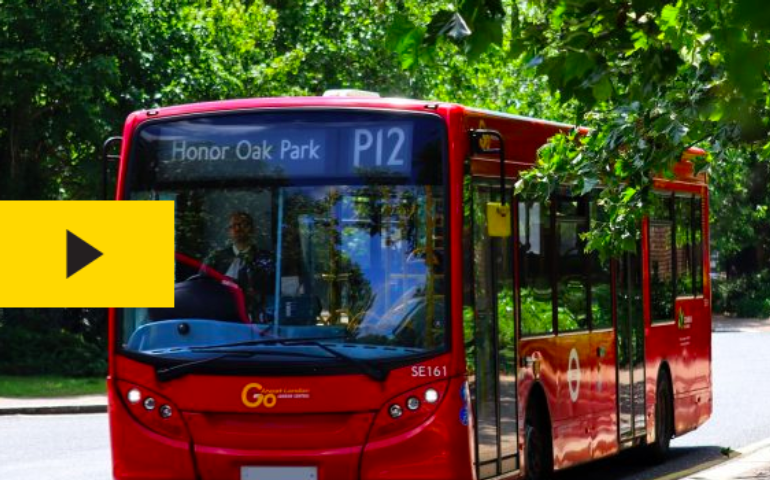
If you heard that there was a piece of technology that could do away with traffic jams, make cities more equitable, and help us solve climate change, you might think about driverless cars, or hyperloops or any of the other new transportation technologies that get lots of hype these days. But there is a much older, much less sexy piece of machinery that could be the key to making our cities more sustainable, more liveable, and more fair: the humble bus. Steven Higashide is a transit expert, bus champion, and author of a new book called Better Buses Better Cities. And the central thesis of the book is that buses have the power to remake our cities for the better. But he says that if we want the bus to reach its potential, we’re going to have to make the experience riding one, a lot more pleasant.
inglese
"Hardware" means the computer itself and other machines which are connected to the computer such as printers or external disk drives. "Software" means the electronic programmes which make the computer do what you want it to do (or, sometimes, what the computer wants to do!)
inglese
Intelligence. What does it mean? The word "intelligence" has two main meanings in English. First, it can mean "mental capacity" – if you are intelligent, you can think clearly and rationally, for example. But "intelligence" also means information. For example, we can talk about "market intelligence" – and that means, information about what is happening in a market, such as the stock market or the international oil market. Very often, we use "intelligence" to mean information which is secret, or which has been obtained illegally.
inglese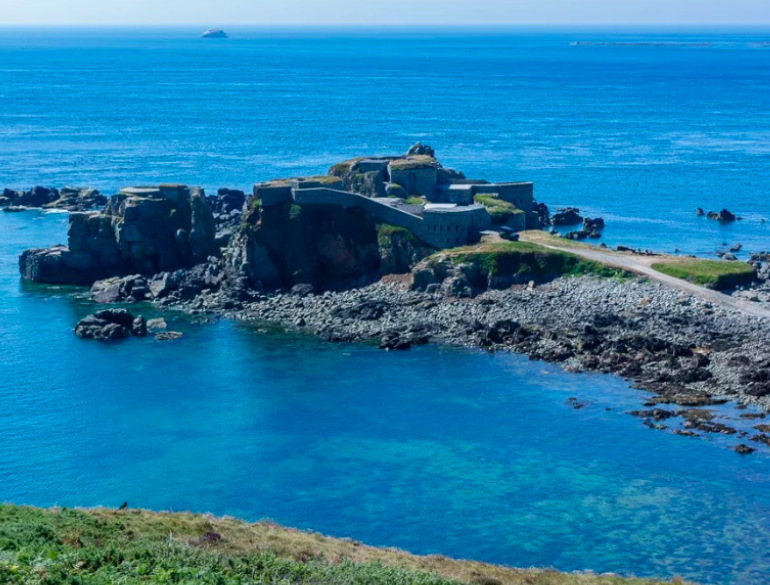
Today we visit the Channel Islands. The Channel Islands are a group of islands in the English Channel, close to the north coast of France. But they are not part of France. And they are not really part of Britain either. The British Queen is also ruler of the Channel Islands, and the British government looks after their defence and foreign affairs. But in other respects, the islands are tiny independent states – they have their own Parliaments and governments and their own laws. Until about 100 years ago, most people on the islands spoke a dialect of French, but today the main language is English.
inglese
Hello everyone. A few years ago, I moved from England to New Zealand to coach football to children in Auckland, the biggest city in New Zealand. I'd like to tell you about the differences between football in England and football in New Zealand. I grew up in London in England and spent many hours as a child playing football with my friends in the park. We used to play football after school and at the weekend, and often all day long in the school holidays. One of the first things I noticed when I moved to New Zealand was that very few children play football after school or at the weekends. Even on a sunny day in New Zealand, many of the parks will be completely empty! In cities in England, children will arrange to meet their friends for a game in the park, but in New Zealand the children only ever play football when it's organised for them by their parents or by their team coach. If you've ever played football, you will know that it takes many hours of practice to get skilful and make the ball do anything you want it to. Sometimes it can take lots and lots of mistakes before a child gets it right! In New Zealand, children don't spend a lot of time playing football on their own so they don't try new things and make mistakes. Instead they spend an hour or two a week being told what to do by a parent or a coach. This means they don't get to make their own mistakes and learn things for themselves. Imagine learning English and never being allowed to make a mistake? It would be very difficult, and not much fun either!
inglese
Create a lesson by adding multiple slides, each capable of holding a diverse range of content blocks, including text, video, images, and more. Choose the appropriate type and quantity of content for each slide as needed. Create a lesson by adding multiple slides, each capable of holding a diverse range of content blocks, including text, video, images, and more. Choose the appropriate type and quantity of content for each slide as needed.
inglese

It’s estimated that there are 23 million gardens in the UK – that’s a lot of land with which we can be gardening for wildlife! Bees, birds and butterflies are not only beautiful in their own right, but are useful for the gardener, from pest control to pollination. Bees help pollinate flowers and food. Frogs eat slugs. Birds and ladybirds help keep aphids at bay. If you want to create a home for wildlife in your garden, here’s a couple of nature-friendly gardening jobs to inspire you. If you create the right space, nature will come.
inglese inglese

In this class we will learn other Unreal past expressions and talk about Criticism.
inglese

Some / Any / Review how to use 'some' and 'any' here. Online exercises for using confusing words correctly. Have a try!
inglese

Lesson about natural disasters- what they are, how to deal with them, facts and figures. Reading, use of English and listening
inglese

Presenting yourself for on public in English
inglese
Who is the Easter Bunny?
inglese
Miami: Where Sun, Culture, and Energy Collide" takes a closer look at Florida’s most vibrant metropolis. From the pastel Art Deco architecture of South Beach and rich Latin heritage to its thriving nightlife, arts scene, and coastal lifestyle, discover what truly makes Miami one of the most dynamic cities in the world.
inglese
In this lesson we will discuss what is Agile life and how to use it. Also we will have grammar - tenses
ingleseIn this class we will revise future constraction and adverbs
inglese