IT
How does Onclass work? Support Online now: 488

Video / Lessons

Popular lessons

Other lessons

0
24
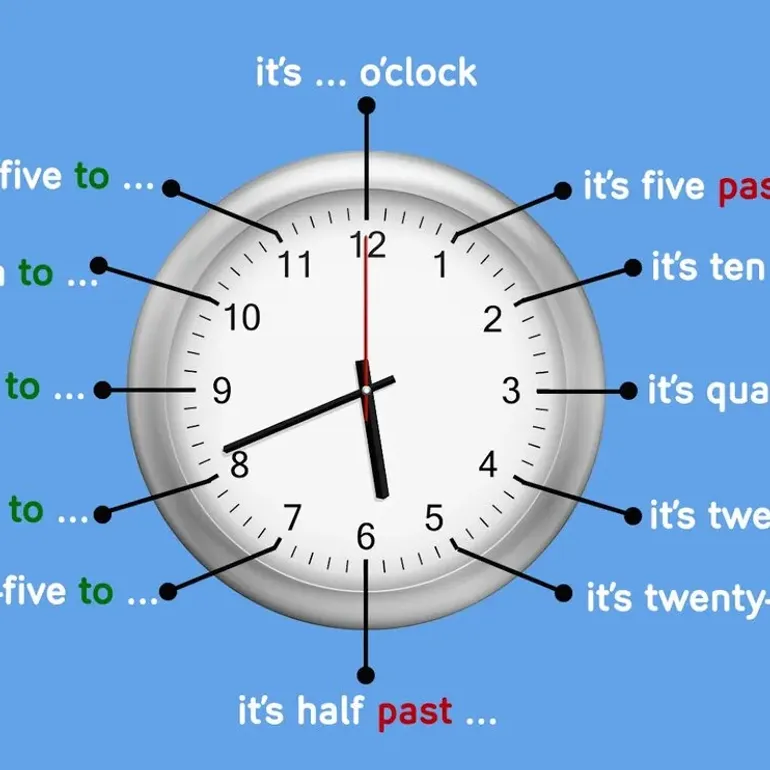
Telling the Time: What time is it?
  • English

Telling the Time: What time is it?

This lesson helps learners understand how to ask for and tell the time in English. Students will learn key expressions such as o’clock, half past, quarter past/to, and how to use a.m. and p.m. They will also practice common questions and answers: “What time is it? – It’s …” and “When does it start? – At …”.

  • Image
  • Elementary
  • English
Oleg Ivanov
Oleg Ivanov
0
24
Family
  • Russian

Family

In our next Russian lesson will introduce words and phrases associated with families. This will allow you to talk about your family, which is a very popular topic of conversation in Russia. One of the important concepts that we will introduce in this lesson is possessive pronouns. Possesive pronouns are words such as: my, your, his, her, and our. Personal pronouns are normally used to indicate the ownership of an object. The other method to indicate ownership is to use the genative case.

  • Theory
  • Beginner
  • Russian
Eugeniia Klimutina
Eugeniia Klimutina
0
24
Have got
  • English

Have got

In this class we will discuss family and learn have got

  • Theory with exercises
  • Beginner
  • English
Maria  Nekrasova
Maria Nekrasova
0
23
The Lightbulb
  • English

The Lightbulb

A few years ago there were lots of lightbulb jokes in English. You probably had them in your language too. Here is an example. How many policemen/civil servants/school teachers does it take to change a lightbulb? Five – one to stand on a table holding the lightbulb, and four to pick the table up and turn it round. Some people find these jokes very funny. Other people don't think they are funny at all.

  • Podcast
  • Beginner
  • English
Eugeniia Klimutina
Eugeniia Klimutina
0
23
Linkers
  • English

Linkers

In this class we will talk about presentations and linking words

  • Theory with exercises
  • Advanced
  • English
Maria  Nekrasova
Maria Nekrasova
0
23
English Pronunciation for Spanish Speakers
  • English

English Pronunciation for Spanish Speakers

English pronunciation for Spanish speakers. If Spanish is your native language, this video will help you to fix a common mistakes that Spanish speakers make when they're speaking English. When the letter S is at the beginning of a word and the following letter is a consonant, make sure that you don't add an extra vowel sound before the word. For example, don't say "estudy". Don't take a breath before you say the word. Just start saying the "s". Watch this video for other examples.

  • Video lessons
  • Elementary
  • English
Eugeniia Klimutina
Eugeniia Klimutina
0
23
Personal traits
  • English

Personal traits

In this class we will talk about personalities, revise present tenses

  • Theory with exercises
  • Upper Intermediate
  • English
Maria  Nekrasova
Maria Nekrasova