

- Russian
- Theory with exercises
- level.adv
 Russian
 Russian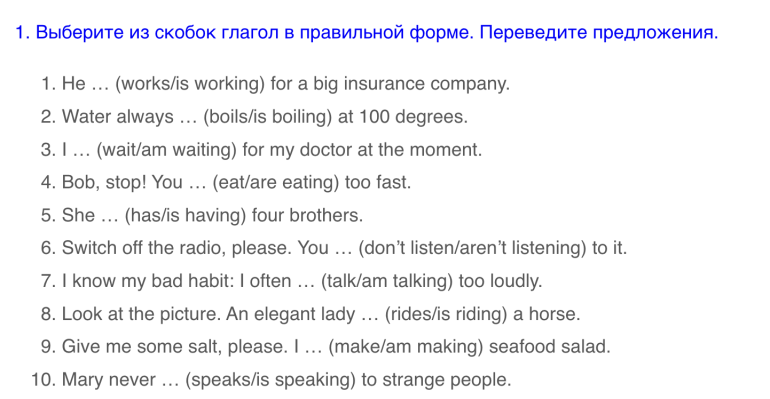
1. I (to do) morning exercises. 2. He (to work) at a factory. 3. She (to sleep) after dinner. 4. We (to work) part-time. 5. They (to drink) tea every day. 6. Mike (to be) a student. 7. Helen (to have) a car. 8. You (to be) a good friend. 9. You (to be) good friends. 10. It (to be) difficult to remember everything.
English

Hai capito il testo? Esercizio di comprensione del testo:
Italian

This is the VOA Special English Education Report. Web browsers first appeared on computers in the early nineteen nineties. Since then, the Internet has greatly changed the way people communicate. But some teachers think the changes are not all for the better.
English
Dragons’ Den is a staple of British television, where ambitious entrepreneurs pitch their business ideas to a panel of multi-millionaire investors. In Part 1 of this guide, we dive into the real-world business vocabulary used inside the Den. You’ll learn key terms and idioms related to valuation, equity, pitch presentations, and negotiations. Whether you're aiming to sharpen your professional English for meetings, boost your listening comprehension, or master the art of the pitch, this episode breaks down native expressions through the lens of high-stakes television drama.
English
Всем привет! Многие не знают, как и где употреблять частицу 呢 в китайском предложении. Давайте разбираться вместе. Пиши свой пример в комментариях. Приятного просмотра!


Всем привет! В этом видео я предлагаю логику запоминания иероглифов. Это не единственный способ запоминания китайских иероглифов, но символьный - самый рабочий. А также предлагаю способ, как запомнить тоны, ведь они всегда очень важны. Приятного просмотра!

-----
English

Get acquainted. Introduce yourself and other people.
Russian

大家好!Всем привет! Как сказать путешествовать по-китайски, 旅游 lǚyóu или 旅行 lǚxíng? И в чём разница?